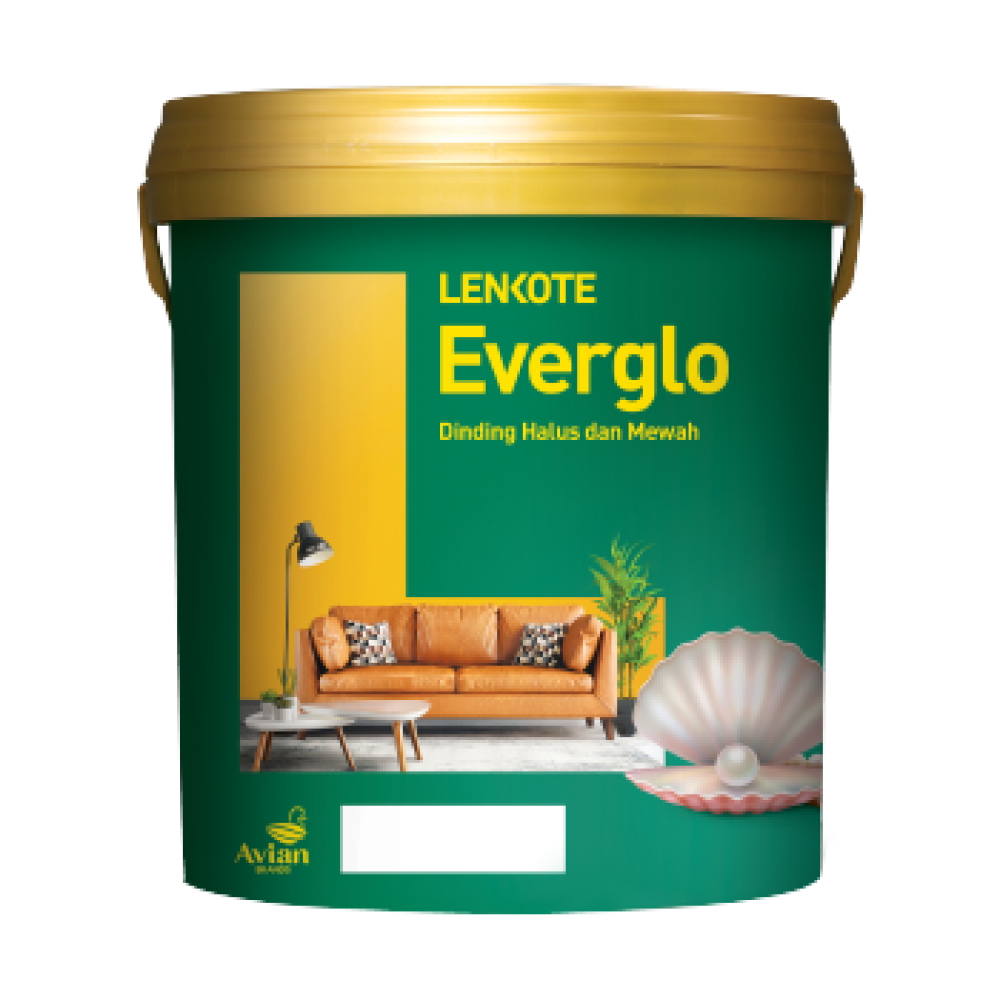























Paint is one of the most important parts of a house's appearance. Besides forming the house's unique character through its distinctive colors, paint functions to protect the surface area it covers. Based on its use, paint is categorized into two types: interior paint and exterior paint. What are the differences between the two? Let's check out the following explanation so you don't choose incorrectly.
IngredientsBoth interior and exterior paints have ingredients consisting of binder (resin), solvent (thinner), pigment (colorant), and additives.
- Binder
Binder or resin is the binding agent for all paint components and enables them to adhere to walls. This is the largest component in a paint, whether interior or exterior.
- Solvent
Solvent functions to dissolve the material into a liquid form, which then evaporates as the paint dries. Solvents are needed to thin resin, which has a very thick texture. Additionally, solvents also regulate the drying time. Solvents are divided into two types: water-based and oil-based, whose use depends on the type of paint used.
- Pigment
Pigment is the element that gives color to paint. Pigment ingredients can be natural or synthetic, or specially produced using artificial materials.
- Additive
The last paint component, additives, are materials intentionally added to paint to improve its performance and appearance. The difference between interior and exterior paints lies in the type of resin and additives contained within them.
Differences Between Interior and Exterior PaintThe ideal characteristics for interior and exterior paint differ because their application areas are also different. Generally, interior paint consumers want paint that is not easily soiled or is easy to clean, and is not easily scratched or peeled.
Good quality interior paint is made with stiffer resins and does not contain volatile organic compounds (VOCs) which are harmful to health. In addition, interior paint can have a variety of finishes including semi-gloss, gloss, matte, satin, and eggshell.
Meanwhile, the ideal criteria for an exterior paint is its ability to withstand weather changes, including exposure to UV rays that cause color fading and the growth of mold in humid conditions. Therefore, exterior paint requires a stronger paint layer than interior paint.
After knowing the differences above, Avian Brands Friends surely want to choose the best product for each area of their home, right? Use paint according to the recommended usage for maximum results. It is best not to use interior-specific paint for outdoor areas of the house.
Read Also: 7 Sunguard All-In-One Exterior Paint Color Recommendations
Superior Exterior PaintWeather changes greatly affect the durability of exterior walls. The most common problem that arises on exterior wall surfaces is cracks caused by the expansion of wall gaps by air. In addition, exposure to sunlight can make paint colors fade faster than interior paint.
Sunguard All-In-One is equipped with UV Shield Pro technology which can block the sun's infrared rays, thus capable of lowering indoor temperatures by up to 5° Celsius. At the same time, UV Shield Pro also reflects the sun's UV rays, maintaining the paint color in its best condition.
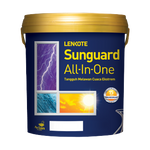
Surely, Avian Brands Friends don't want exterior wall paint whose color fades quickly, right? Fortunately, Sunguard All-In-One guarantees bright colors for up to 15 years. Thus, there's no need to fear exterior wall colors fading quickly after a few months of painting.
Sunguard All-In-One is available in over 10,000 colors which can be obtained through tinting machine technology at nearby building material stores. Avian Brands Friends can choose their favorite exterior wall paint color to then be produced by Avian Brands' fast and accurate tinting machine.