





































Have you ever noticed what colors are used for the indoor walls you usually occupy? Choosing wall colors for a room cannot be underestimated, because it turns out that colors on room walls have specific meanings and can be interpreted differently in each different room. In addition, the effect of color is very strong and important for a person's physical and psychological well-being. Here are 7 meanings of colors in a room:
1. RED color in the dining room to increase appetite
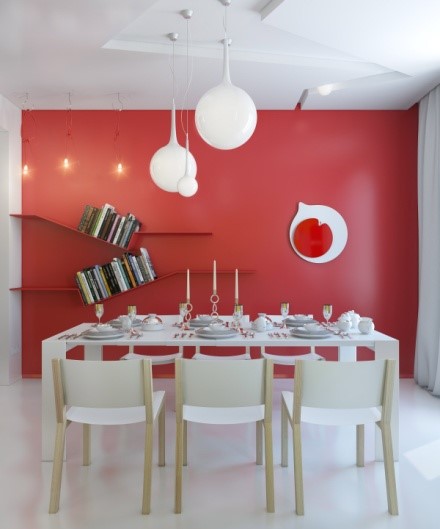 Red color is closely associated with passion, energy, and emotion. Red has the meaning of making people more "alive," so this color is more suitable for use in the dining room. Research shows that looking at red can increase heart rate and make us breathe faster. Red is said to increase respiratory rate and raise blood pressure, as well as increase appetite. Therefore, red is often used as the wall paint color in restaurants and eateries. Red is also a good choice for wall colors in the dining room.
2. ORANGE color in the family room to provide a sense of comfort
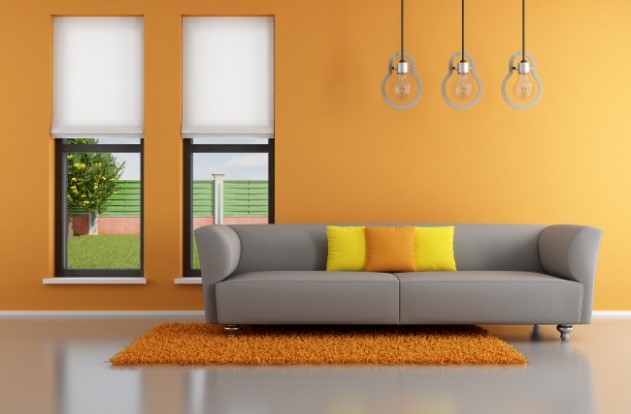 Orange color is associated with the color of the sun during the day, which can indicate energy and happiness. Homeowners who paint their room walls orange want to show positive energy that characterizes a high level of enthusiasm. Orange is known to help increase the oxygen supply to the brain, producing a refreshing effect and stimulating mental activity, and can make people feel comfortable. Because orange is a color that can stimulate and create comfort, orange would be very good when used on kitchen or living room walls, where all family members usually gather.
3. YELLOW color in the workspace to increase concentration
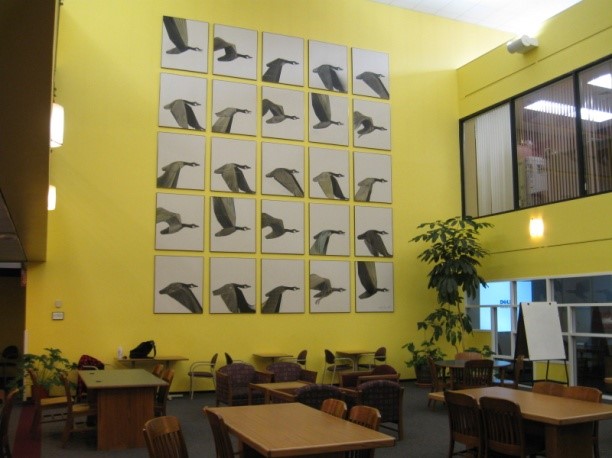 Yellow color is often associated with cheerfulness, joy, and happiness. Although many consider this color bright, the dominant use of yellow can create a heavy impression when viewed, as it has a psychological tendency to make people enjoy arguing. Furthermore, in color psychology, yellow can help to think logically. Therefore, yellow is suitable for study rooms and workspaces, as this color can increase concentration.
4. GREEN color in the living room and bedroom to give a peaceful impression
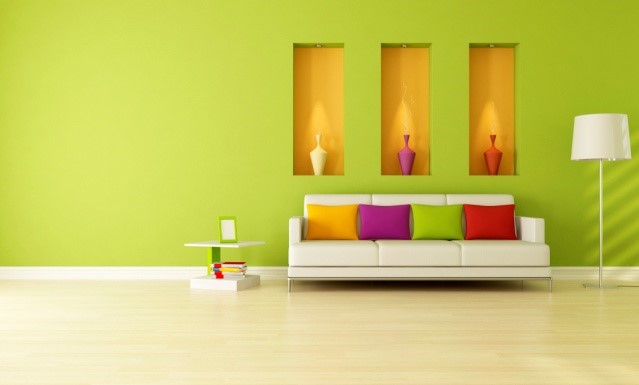 Green color reminds us of nature, as green dominates what we see in the outdoors such as grass, trees, and leaves. As a combination of calm blue and cheerful yellow, green is considered a soothing color for the eyes. According to psychologists, green evokes a feeling of calmness and freshness because, in addition to creating a light impression when viewed, the effect of green is also believed to improve vision by bringing the essence of nature into the room's interior. Homeowners with green wall paint want to show a sense of comfort and togetherness. Therefore, green is suitable for use in the living room; furthermore, the peaceful green in the living room can provide a relaxing effect to relieve fatigue after a long day's work.
5. BLUE color in the bedroom to provide tranquility
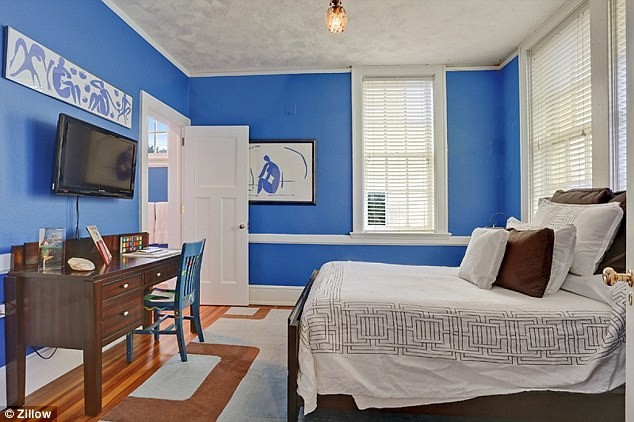 Blue color reminds us of the very comfortable blue of the sea. According to Chinese spatial science or feng shui, blue is considered a balancer for red, as blue has a fire-calming nature. Many people use this color for private rooms such as bedrooms, meditation rooms, or therapy rooms. A calm and peaceful blue is said to be quite good for the bedroom. Based on a study by Travelodge, the color blue on bedroom walls can provide tranquility for sleep, so people who have blue-themed rooms are said to have longer sleep times.
6. BLUE color in the workspace is believed to bring success
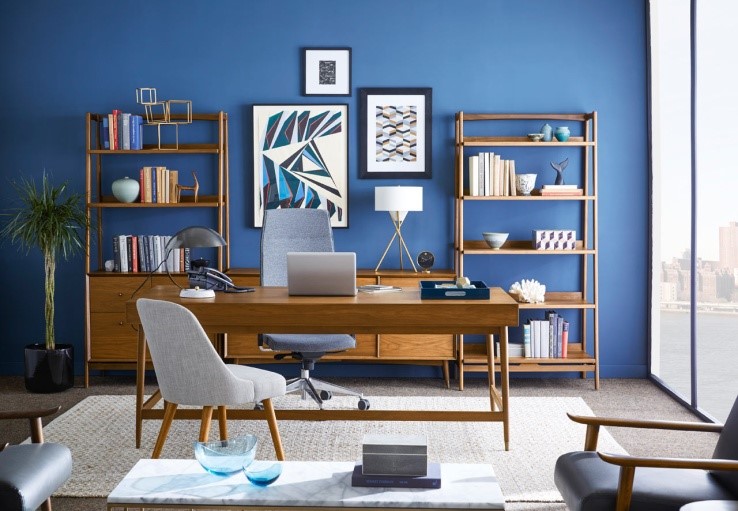
In addition to yellow, blue is also suitable for use in workspaces. Similar to yellow, blue in psychology can stimulate clear thinking, and light blue helps calm the mind and increase concentration. Furthermore, blue is commonly used to reduce blood pressure due to its calming nature. In a workspace, blue provides an atmosphere of calmness and comfort, as well as giving a cool impression and stimulating performance and harmony for those working in that workspace. In several surveys, blue on walls is believed to bring success. Based on a survey in the UK, those living in homes with blue wall colors were more successful than those living in homes with non-blue wall colors.
7. BROWN color on room walls creates mood stability
Like the color green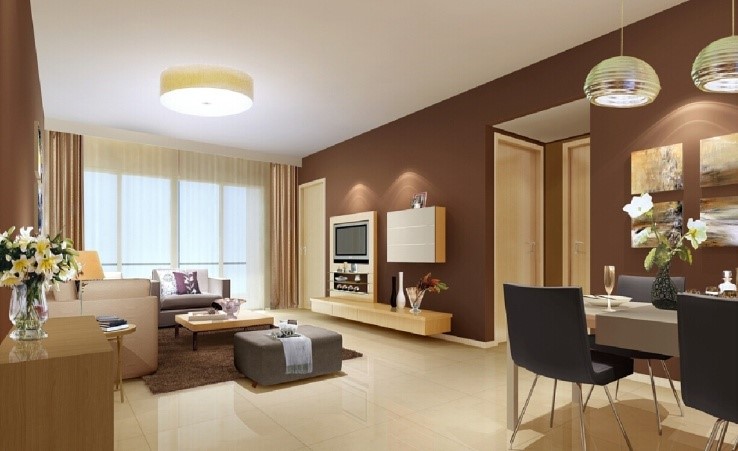 , brown also represents the color of nature. Compared to stimulating green, this color tends to be flat. Brown is a neutral color like white, gray, and black, which are basic colors with high flexibility. Homeowners who only use this color element on their walls want to show simplicity. Although it has a simple element, this color also creates a calm impression, especially when combined with a touch of bright colors like yellow. Brown can also be used as a combination that creates mood stability and calms. Furthermore, brown often conveys a mature or old condition, which can give an impression of reliability, elegance, familiarity, and strength.
To create the right color, use only the great paint Avitex. Because Avitex Wall Paint is produced from a great process, a great paint is created. With the best resin, the best pigments, and no mercury, Avitex becomes the wall paint Pride of Great People. Avitex Wall Paint is an interior wall paint that has 75 favorite color options for Indonesian people.
Avitex, From a Great Process, Great Paint is Created.